
Visiting the Taj Mahal with Kids: Best Times, Tips & Nearby Activities
Is the Taj Mahal worth visiting with kids? Learn the best time to go, how to manage crowds and heat, and what to pair it with in Agra.
INDIAASIAWORLD WONDERS
4/1/20267 min read


Some links in this post are affiliate links. If you book through them, we may earn a small commission — at no additional cost to you. We only recommend hotels, tours, and experiences we’ve personally used and loved.
If you’re planning the Golden Triangle and asking, Is the Taj Mahal worth visiting with kids? — the answer is yes. But timing, pacing and structure make the difference between a memorable highlight and a hot, crowded box-ticking exercise.
This guide breaks it down the way parents need:
Is the Taj Mahal good for children?
When is the best time to visit with kids?
How do you manage crowds, heat and security?
What should you pair it with in Agra?
How do you reduce fatigue around the visit?
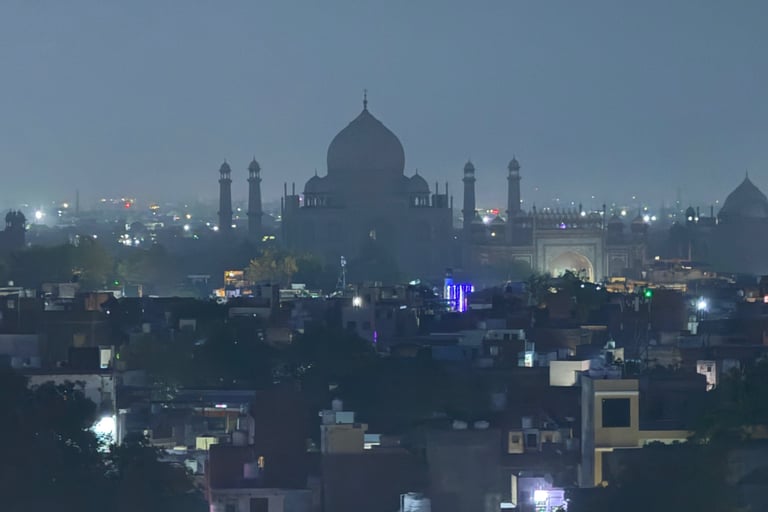
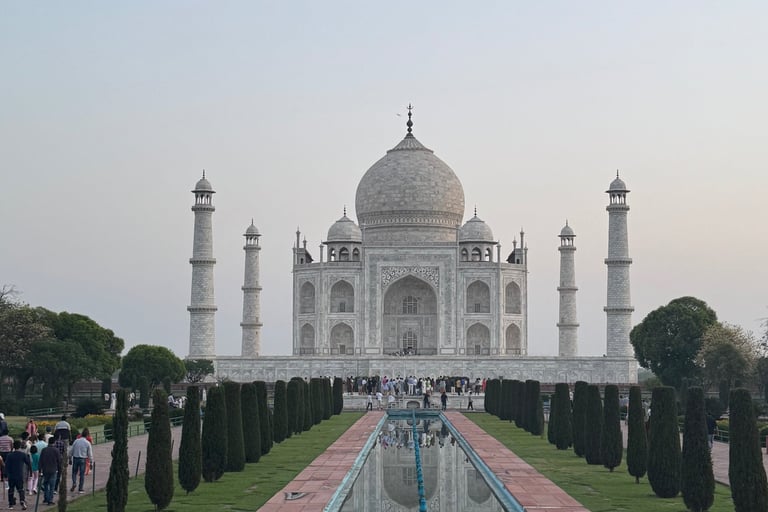
Is the Taj Mahal Good for Children?
The Taj Mahal works with children because it is visually simple and instantly recognisable.
Unlike many historic sites that require context to appreciate, the Taj is:
Symmetrical
Monumental
Set in open space
Easy to understand at a basic level (a palace built for love)
School-age children respond to scale. They also respond to achievement. For many families, visiting a New Seven Wonder of the World feels significant in a way that smaller monuments do not. Our 9-year-old son loved the fact he was visiting a ‘world wonder’. The key is not whether to visit. It’s how.
Taj Mahal Opening & Closing Times — What Families Should Know
Timing matters at the Taj Mahal more than most parents realise — not just for avoiding crowds, but also for planning your train, driver or hotel schedule around Agra.
Daily Visiting Hours
The Taj Mahal does not follow fixed clock hours (like “9 AM–5 PM”). Instead, visiting hours are tied to sunrise and sunset:
Gates open: ~30 minutes before local sunrise
Monument closes: ~30 minutes before local sunset
That means the exact times shift daily with the sun. For example, in summer months gates frequently open around 5:30 AM, whereas in winter they might open around 6:30 AM and close accordingly in the early evening. Ticket counters at the western and eastern gates open about 1 hour before sunrise and close about 45 minutes before sunset, so arriving early ensures you get inside by opening.
Weekends vs Weekdays
Where possible try to avoid weekends, weekdays will be quieter and less crowded.
Closed Days
The Taj Mahal is closed to general visitors every Friday. This isn’t an arbitrary maintenance day — it is closed because the mosque within the complex is used for jumma (Friday) prayers, and public sightseeing is not permitted during this time.
If your Golden Triangle itinerary places you in Agra on a Friday:
Plan visits to Agra Fort, Itimad-ud-Daulah or Mehtab Bagh that day
Return to the Taj earliest the next morning for the best experience
Best Time to Visit the Taj Mahal with Kids
Early Morning (Recommended)
For families, sunrise is almost always the best choice.
Why?
Cooler temperatures
Lighter crowds
Softer light
Shorter security lines
More space to move
You avoid the combination that makes sightseeing hard with children: heat + congestion + long queues. Arrive before gates open. Security checks are strict and time-consuming later in the day.
Parent Insight
An early start may sound ambitious, but it actually makes the day easier overall. Visiting the Taj Mahal at sunrise means cooler temperatures, fewer crowds and a calmer experience. It also allows you to return to your hotel by late morning, usually in time for breakfast, leaving the afternoon free for rest or pool time.
It’s worth having a small snack before leaving the hotel, especially with children, so no one arrives tired and hungry. We also found insect repellent helpful early in the morning, as mosquitoes were fairly active around sunrise. I unfortunately seemed to attract most of them — fortunately Joshua escaped relatively unscathed. Another tip is to have a cooling towel to hand, we found this helpful for Joshua on particularly hot days.
Midday or Afternoon (When It Makes Sense)
Midday visits can work:
In cooler months (November–February)
If sunrise timing feels overwhelming
If you have a child who struggles with early starts
However, expect:
Stronger sun exposure
More tour groups
Less freedom of movement for photos
If you choose this option, shorten the visit and prioritise shade breaks. For a detailed comparison: Taj Mahal Morning vs Midday: What Works Best with Kids?

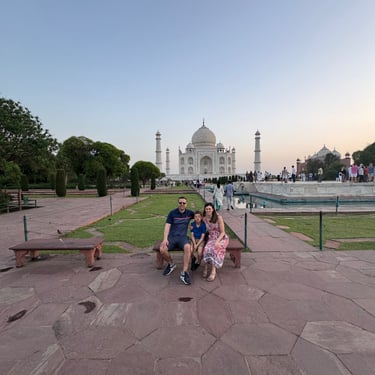
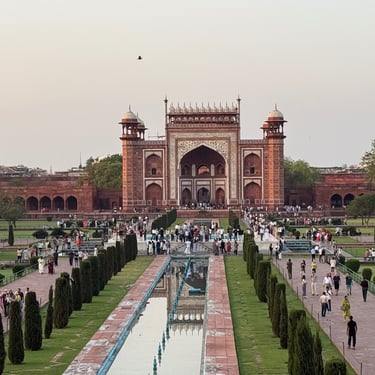
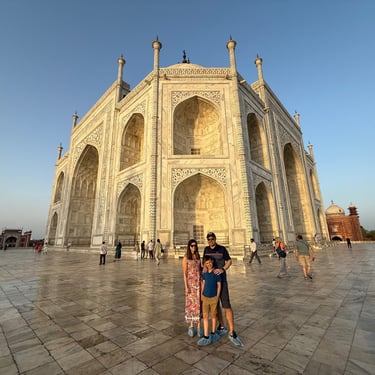
How Long Do Families Need at the Taj Mahal?
Plan for around 1–2 hours onsite when visiting the Taj Mahal with children.
This is usually enough time to walk through the main gateway, experience the first view of the Taj, explore the gardens and marble platform, and take photos. Most families will also have time to briefly enter the inner mausoleum if queues are reasonable.
In practice, children tend to stay engaged for about this length of time before heat, crowds or fatigue start to take over. The Taj is visually powerful, but it’s not a site that requires half a day to appreciate.
The best approach is to enjoy the main viewpoints, take your time around the central platform, and then leave before energy levels drop. Saving time for breakfast back at the hotel or a pool break later in the morning usually makes the day feel much more balanced.
What Parents Should Know Before You Go
1. Security Is Strict
No large bags. Limited items allowed inside. Expect airport-style scanning.
Plan accordingly:
Small crossbody bag or small backpack
Water (check current regulations but we had to issue bringing this with us)
Sunscreen and insect repellent applied before entry
Avoid bringing too many unnecessary items. It slows you down.
2. Distances Are Larger Than They Look
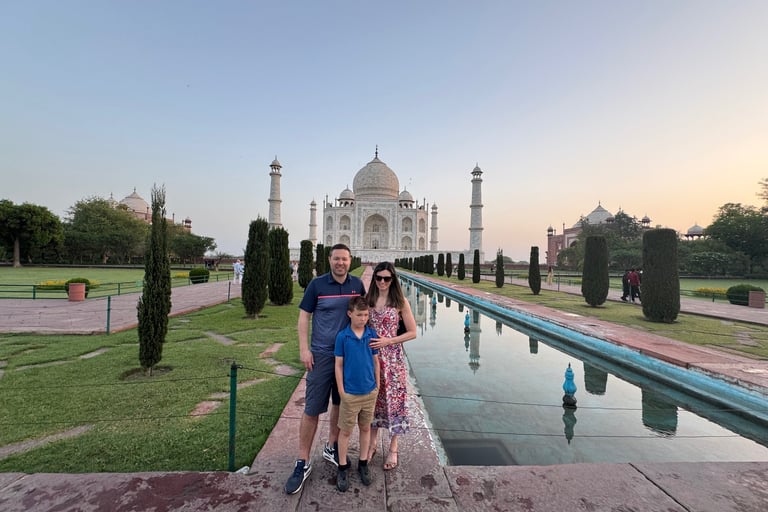
From the entrance gate to the main mausoleum is a long, straight walk through the gardens. With children, that means pacing matters.
Encourage them to:
Notice symmetry
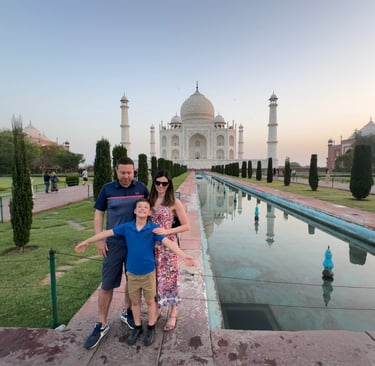
Spot reflections in the water channels
Compare distances
Turn the walk into an activity rather than a march.
3. Expect Crowds Inside the Mausoleum
The inner chamber can feel congested and rushed.
With younger children, consider:
Taking turns entering
Skipping the interior if queues are excessive
Managing expectations beforehand
The exterior is the real visual highlight. Our guide brought our tickets for us the night before including the entry for the interior, this avoided excess queuing on the day.
Do You Need a Tour Guide at the Taj Mahal?
In short, no — you don’t need one. The Taj Mahal is visually powerful enough to appreciate on your own, and the layout is straightforward to navigate.
That said, a private guide can be helpful for families. You can move entirely at your own pace, keep explanations short and child-focused, and avoid unnecessary waiting or confusion at entry points. Most reputable hotels can arrange a licensed private guide in advance or you can book via GetYourGuide or Viator.
One unexpected bonus? Guides are usually excellent at taking family photos. They know the best spots and if you want everyone in the frame without juggling tripods or asking strangers, that alone can make it worthwhile.

What to Pair with the Taj Mahal
Agra works best when you build around the Taj rather than overloading the day.
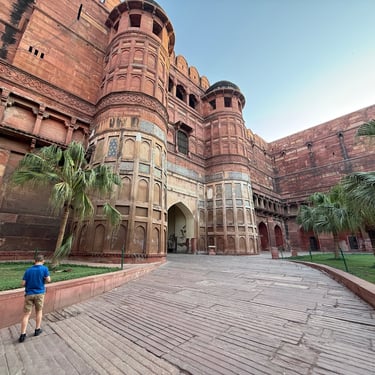
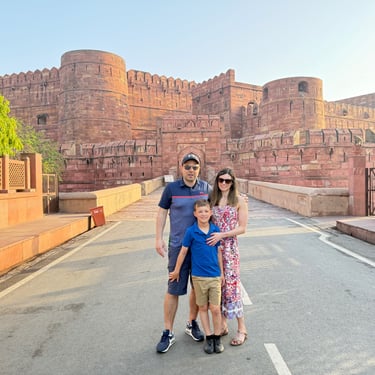
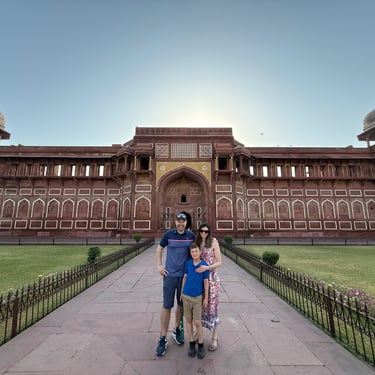
Agra Fort (Highly Recommended)
Agra Fort complements the Taj well. It offers:
Open courtyards
Shade
Elevated views
Space to move
It feels less crowded and more exploratory.
Visit either:
Later the same day after rest
The following morning
Avoid stacking both back-to-back without a break.

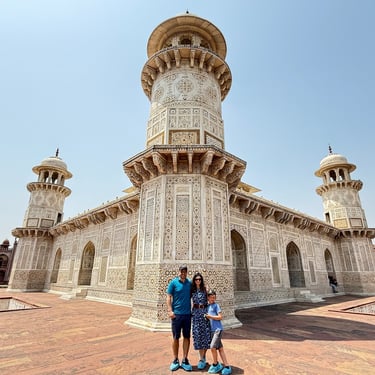
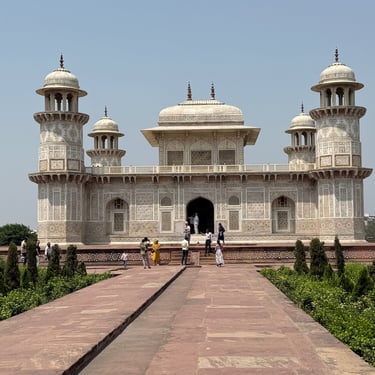
Itimad-ud-Daulah (The “Baby Taj”)
Smaller, quieter and beautifully detailed. This works well as a shorter, lower-intensity visit.
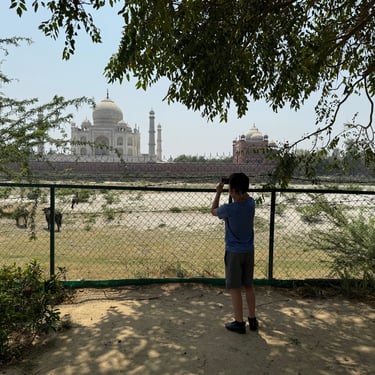
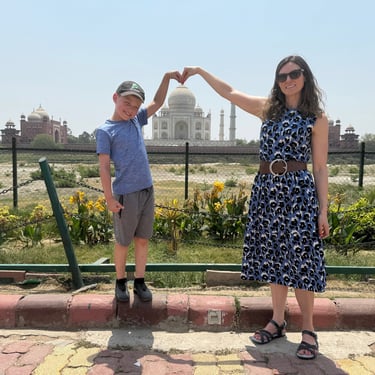
Mehtab Bagh (Best for Sunset)
Located across the river, this garden offers a peaceful rear view of the Taj.
For families, it’s often:
Less crowded
Cooler in late afternoon
A calmer photo opportunity
This can be a good way to revisit the Taj visually without re-entering the main complex. For a more detailed overview of these sites see: Best Things to Do in Agra with Kids Beyond the Taj Mahal
Where to Stay for the Best Taj Experience
Your hotel choice in Agra directly impacts how manageable the Taj visit feels. We stayed at Tajview Agra, and for families it works exceptionally well.
Why It Works
Clear Taj views from the property
Large pool
Garden space
Rooftop dining
Suite options for extra space
Seeing the Taj from your hotel adds anticipation before your visit and allows you to revisit it visually afterward without another security line. Most importantly, the pool gives children a reset after an early start. That downtime is not optional. It is what keeps the trip balanced.
For a full breakdown: Tajview Agra Review: Is It Worth It for Families?
Structuring Your Taj Day for Success
A format that works well:
Early Morning – Sunrise Taj visit
Morning – Breakfast back at hotel
Post Breakfast – Agra Fort + Mehtab Bagh and/or Baby Taj (or split these sites over more than one day and pair with a pool day if time allows)
This preserves energy and keeps the Taj as a highlight rather than a marathon.
Is the Taj Mahal Worth It With Kids?
If you approach it with structure, yes — absolutely. It’s one of the rare global landmarks that feels as significant in person as it does in photographs. For children, it becomes a tangible reference point for world history and architecture. But the success of the visit is determined less by the monument itself and more by your planning around it. Go early. Pace it well. Stay somewhere comfortable. And let it be the highlight it deserves to be.
Planning the Bigger Picture?
If you're building a full Delhi → Agra → Jaipur route, it helps to see how this stop fits into the wider journey.
For a structured day-by-day plan with pacing guidance, train advice and hotel recommendations, read: A Practical 10–14 Day Family Golden Triangle Itinerary (Delhi → Agra → Jaipur)
Still deciding whether this route works for your family overall? Is the Golden Triangle Good for Kids? What Parents Should Know Before Visiting India
Seeing the full framework often makes the individual destination decisions much easier. And for broader planning support — including safety, food, visas, budgeting and destination guides — visit our full India Family Travel Hub. Seeing the full framework often makes the individual destination decisions much easier.
