
Best Things to Do in Delhi with Kids During School Holidays
Planning Delhi with kids during school holidays? Discover the best family-friendly sights, parks and practical tips for managing the city
INDIAINSPIRE MEASIA
3/31/20267 min read

Some links in this post are affiliate links. If you book through them, we may earn a small commission — at no additional cost to you. We only recommend hotels, tours, and experiences we’ve personally used and loved.
If you’re starting your Golden Triangle route in Delhi, you’re likely asking a practical question:
Is Delhi good for kids during school holidays?
The short answer is yes — but only if you structure it carefully.
Delhi is busy, layered and fast-moving. It can feel overwhelming if you try to “see everything.” With school-age children, the goal is not maximum coverage. It’s selecting the right types of experiences and pacing them intelligently.
This guide focuses on:
What works well with children
What to approach strategically
How to balance cultural depth with energy management
What parents should realistically expect
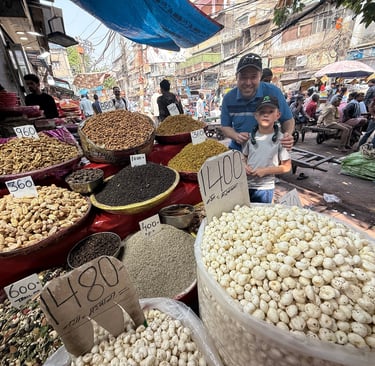
Should Families Visit Delhi During School Holidays?
Yes — Easter is a great time to visit Delhi, especially as the starting point of the Golden Triangle.
Delhi offers:
Large-scale monuments
Open green spaces
Strong hotel infrastructure
Reliable private tour options
Educational depth that supports school learning
School holidays (particularly Easter and October half-term) are common times for international families to visit. The main variable to manage is temperature. Outside winter months, heat builds quickly by late morning. The solution is simple: mornings for sightseeing, afternoons for recovery.
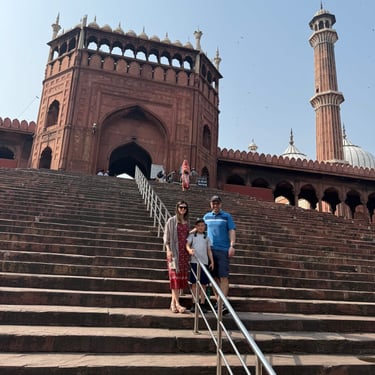
1. Qutub Minar
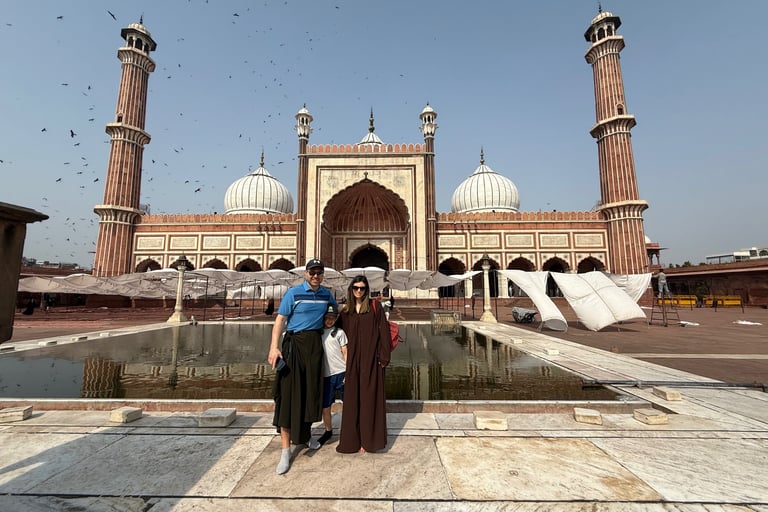
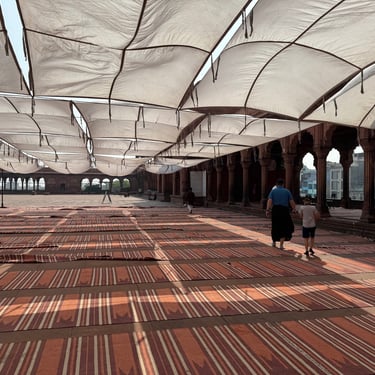
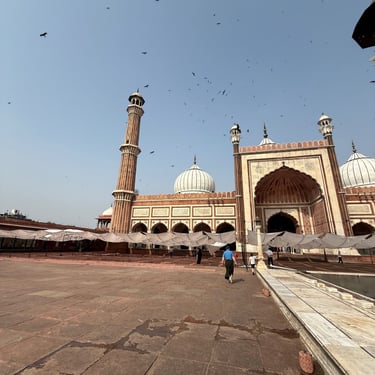
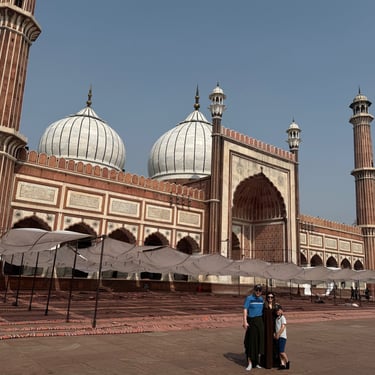
Qutub Minar is one of Delhi’s most recognisable landmarks and the tallest brick minaret in the world, standing around 73 metres high. Built in the 12th century as part of an early Islamic complex, the tower was originally used as a call to prayer for the surrounding mosque. For children, the historical context is less important than the sheer scale. The minaret is dramatically tall and covered in carved bands of stone, which immediately captures attention. The surrounding archaeological complex includes ruins, arches and courtyards that children can walk through, making it feel more like exploration than traditional sightseeing. One thing we enjoyed was seeing the birds circle overhead, it almost felt eerie.
Parent Insight
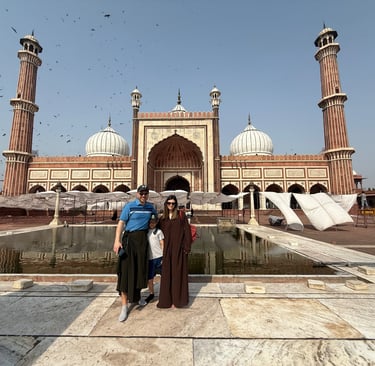
This works best as a morning visit. There is limited shade across much of the complex, and the open courtyards heat up quickly later in the day. Walking surfaces can be uneven in places, so comfortable shoes are helpful, especially if you’re travelling with children who like to climb and explore. Bringing water is also important, particularly outside winter months. Adults were required to wear robes and we were all asked to remove our shoes to enter.
Most families find 30–60 minutes is enough here. It’s a visually impressive stop that holds attention without requiring a long visit.
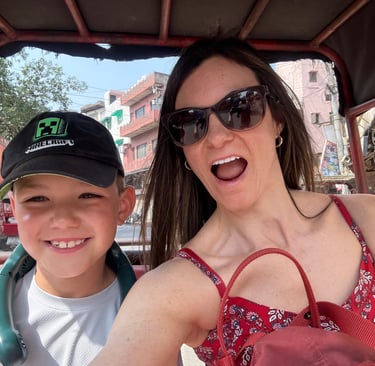
2. Old Delhi Rickshaw Ride
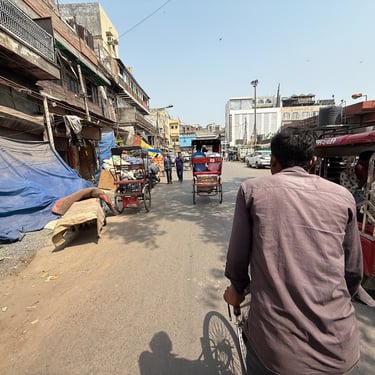
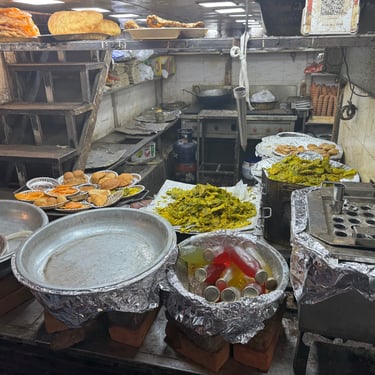
Old Delhi is intense. Narrow streets, traffic, noise and crowds are part of the experience. A short rickshaw ride through Chandni Chowk offers controlled immersion. You see the energy without having to navigate it entirely on foot.
What Children Often Enjoy
The movement and novelty of the ride
The sensory contrast with New Delhi
Spotting market stalls and colours
Keep it brief. Pair it with a structured half-day private tour so you maintain control over timing.


3. India Gate
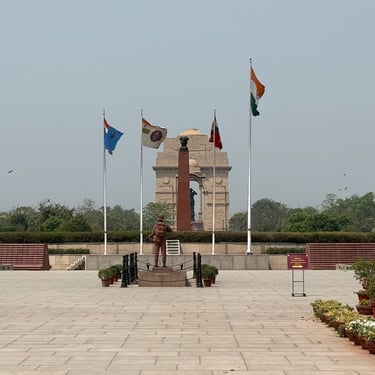
India Gate works particularly well with children because it’s not a confined attraction. It’s a wide, open war memorial surrounded by lawns where kids can move freely.
Why It Works for Families
Room to run
Easy to combine with other central sites
Short visit time (30 minutes is enough)
Informal atmosphere
This is less about deep history and more about letting children adjust to India’s energy while still “doing something.”
4. Lotus Temple
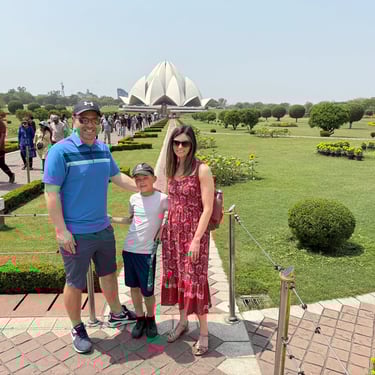
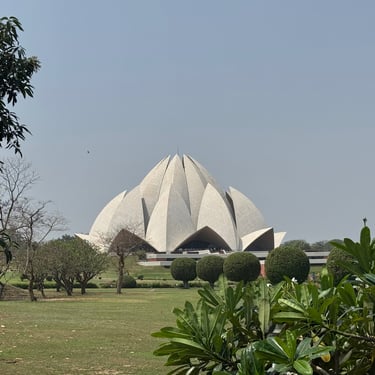
The Lotus Temple is one of Delhi’s most recognisable modern landmarks. Opened in 1986, it’s a Baháʼí House of Worship designed to resemble a giant white lotus flower, built from marble panels that curve outward like petals. Unlike many religious sites, the temple is open to people of all faiths, and the interior is intentionally simple. Visitors enter a large, quiet hall where people sit in silence for reflection or prayer.
For families, the main appeal is the architecture. The scale and shape are visually striking, and the surrounding gardens and pools provide space to walk around and take photos before entering.
Parent Insight
This works best as a short stop rather than a long visit. Children usually enjoy seeing the exterior and learning why it’s shaped like a lotus, but the interior requires complete silence, which can be challenging for younger kids. I wouldn’t bother walking up to it to view inside.
Plan around 30 minutes in total, it is a good opportunity for a toilet stop. The visit pairs well with other nearby sights, but it’s most effective when treated as a quick architectural highlight rather than a major sightseeing block.
5. Rashtrapati Bhavan & Central Vista (Drive-By Option)
While not typically a long stop for children, a drive past Rashtrapati Bhavan and the Central Vista area provides context about modern India’s government. This works well as part of a half-day private car tour rather than a standalone visit.
Optional: Red Fort (If You Want Another Major Monument)
Another major site families often include in Delhi is the Red Fort, a vast 17th-century Mughal fortress built by Emperor Shah Jahan when he moved his capital to Delhi. The complex is enormous, with high red sandstone walls, gateways, courtyards and former royal buildings inside. Historically it’s one of India’s most important landmarks and is now a UNESCO World Heritage Site. For children, the scale of the fort and the sense of walking through a former imperial city can be interesting, particularly if they enjoy exploring large historic spaces.
Parent Insight
Whether to include the Red Fort often comes down to how much Mughal architecture you plan to see later in your trip.
We chose not to visit during our time in Delhi because we already had Agra Fort and Amber Fort planned later in the Golden Triangle. Both are larger and, in our experience, more engaging for children.
If you are short on time in Delhi, it can make sense to prioritise other sights and save your “big fort experience” for Agra or Jaipur instead.
Where to Stay in Delhi with Kids
Delhi is a large, busy city, so choosing the right area to stay can make a big difference to how manageable your visit feels with children. Many families split their time between two types of locations. Staying somewhere with historic character allows you to experience the atmosphere of old Delhi, while a final night near the airport can make departure day much easier.
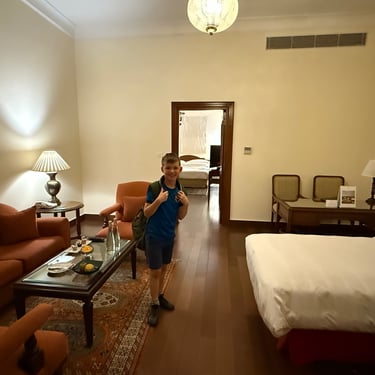
We stayed at Maidens Hotel, a historic colonial property with gardens and a pool that worked well as a calm base for sightseeing. For our final night before an early flight, we moved to Aloft New Delhi Aerocity, which made the airport transfer simple and stress-free.
For a full breakdown of the best areas and family-friendly hotel options, see:
Where to Stay in Delhi with Kids: Aerocity vs Historic Areas
Family-Friendly Hotels Along India’s Golden Triangle



How a School-Age Child Experiences Delhi
Delhi can feel big and busy at first. That’s normal.
Children are likely to enjoy:
Large monuments they can walk around
Rickshaw rides
Open lawns
Clear visual landmarks
What may feel tiring:
Traffic delays
Long historical explanations
Heat by midday
Crowded indoor museums
What surprised us as parents:
Our son engaged more with a reduced the number of stops. Two well-chosen sites in a morning outperform four rushed ones. Delhi works when you focus on scale and space rather than museum-heavy itineraries.
Practical Tips for Visiting Delhi During School Holidays
1. Book a Private Half-Day Tour
A driver and guide allow flexibility throughout the day. Instead of following a rigid group schedule, you can shorten or extend visits depending on energy levels, skip stops that aren’t holding your child’s attention, or head back to the hotel earlier if needed.
Private tours are also easy to arrange in advance. Platforms such as GetYourGuide or Viator allow you to compare itineraries, read reviews from other travellers and book half-day or full-day Delhi tours before you arrive. This removes the uncertainty of trying to organise transport on the day and gives you a clearer idea of what to expect from the experience. If you book a private tour you can set your own itinerary, timings and pace for the day, this is how we structured our time in Delhi with a 8 year old.
Entry Costs for Delhi Attractions
With most tours you will be expected to pay for the sites separately. Most major sights in Delhi charge separate entry fees for international visitors, although prices are generally reasonable compared with many global tourist attractions.
Monuments such as Qutub Minar, Humayun's Tomb and the Red Fort typically cost around ₹600–₹700 per adult for foreign tourists (roughly £6–£7). Children under 15 are often free or significantly reduced. Other places, including India Gate and Lotus Template, are completely free to visit.
If you’re planning to see two or three monuments in a day, budgeting ₹1,200–₹2,000 per adult (about £12–£20) will comfortably cover entry tickets. While some larger sites now accept card or digital payments, having cash in Indian rupees is still the easiest option, especially at smaller ticket counters or when systems are slow. Carrying smaller notes also makes transactions quicker when moving between sites.
2. Start Early
By 11am at the lastest, temperatures and traffic both intensify.
3. Choose Accommodation Strategically
Staying somewhere calm with a pool helps enormously.
If you’re weighing areas: Where to Stay in Delhi with Kids: Aerocity vs Historic Areas
How Many Days Do Families Need in Delhi?
Two nights at the start of your Golden Triangle itinerary is ideal.
That gives you:
One acclimatisation day
One structured sightseeing morning
Pool or hotel downtime
Some families can also add a final night in Aerocity before departure to reduce airport stress and get another view on a more modern area of the city.
Is Delhi Worth Visiting With Kids?
Yes — but it requires intentional pacing. Delhi introduces your child to India’s history, architecture and scale. It builds context for everything that follows in Agra and Jaipur.
It won’t feel calm or resort-like. But structured correctly, it becomes an energising, educational start to one of the most rewarding family travel routes in the world. The difference is not in how much you see. It’s in how deliberately you choose what to see.
Planning the Bigger Picture?
If you're building a full Delhi → Agra → Jaipur route, it helps to see how this stop fits into the wider journey.
For a structured day-by-day plan with pacing guidance, train advice and hotel recommendations, read: A Practical 10–14 Day Family Golden Triangle Itinerary (Delhi → Agra → Jaipur)
Still deciding whether this route works for your family overall? Is the Golden Triangle Good for Kids? What Parents Should Know Before Visiting India
Before you zip your suitcase, check our complete family packing checklist for India to make sure you don’t miss the small items that make a big difference when travelling India with kids.
Seeing the full framework often makes the individual destination decisions much easier. And for broader planning support — including safety, food, visas, budgeting and destination guides — visit our full India Family Travel Hub. Seeing the full framework often makes the individual destination decisions much easier.
