
Self-Guided vs Private Tours in India: Which Works Better with Kids?
Should families explore India independently or book private guides? Compare self-guided travel vs tours across Delhi, Agra and Jaipur.
INDIAASIA
4/9/20265 min read
Some links in this post are affiliate links. If you book through them, we may earn a small commission — at no additional cost to you. We only recommend hotels, tours, and experiences we’ve personally used and loved.
When planning a family trip to India, one decision comes up quickly:
Should you explore independently, or hire private guides and drivers?
Both approaches work well in India, especially along the Delhi → Agra → Jaipur Golden Triangle. But the experience can feel very different when travelling with a school-age child.
The best choice often depends on three things:
how comfortable you are navigating busy cities
how structured you want your days to be
how much flexibility your child needs
Below is a practical breakdown based on what families typically experience.
If you're still planning the route itself, start here: A Practical 10–14 Day Family Golden Triangle Itinerary (Delhi → Agra → Jaipur)
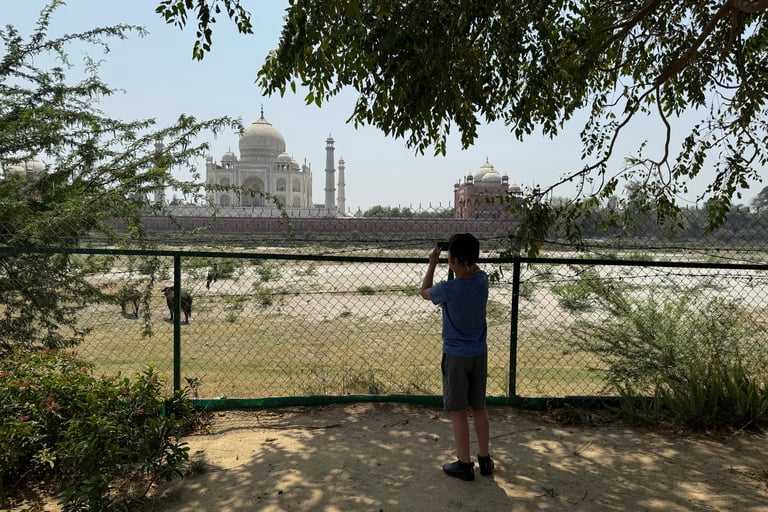
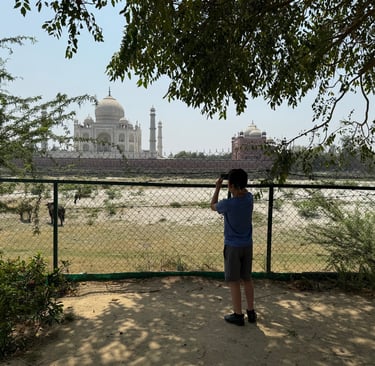
Option 1: Self-Guided Sightseeing
Many families successfully explore India independently. Major attractions such as the Taj Mahal, Qutub Minar and Amber Fort are easy to navigate once you arrive.
Ticket counters, signage and walking routes are straightforward.
Why Self-Guided Works Well
You control the pace
With children, flexibility is valuable. If energy drops or the weather becomes hot, you can shorten visits or head back to the hotel. This is particularly helpful in places like Agra where a Taj Mahal sunrise visit may already require an early start.
See: Taj Mahal Morning vs Midday: What Works Best with Kids?
Lower costs
Self-guided travel is usually cheaper. You only pay for:
monument entry tickets
taxis or ride-hailing apps
occasional local guides if you choose
Most monument tickets cost ₹200–₹1,100 (roughly £2-11), which keeps sightseeing costs relatively manageable.
Freedom to choose what interests your child
Children rarely need hours at historical sites. Exploring independently means you can focus on the highlights without forcing long tours. For example, in Agra in addition to the Taj Mahal, many families visit Agra Fort and Itimad-ud-Daulah and skip smaller stops if attention spans fade.
For more on things to do with kids in Agra, see: Best Things to Do in Agra with Kids Beyond the Taj Mahal
Where Self-Guided Travel Can Be Challenging
While independent travel works well, there are a few realities to consider.
Navigation in busy cities
Cities like Delhi can feel overwhelming at first. Traffic, crowds and large distances between attractions can make planning logistics tiring.
For more on things to do with kids in Delhi, see: Best Things to Do in Delhi with Kids During School Holidays
Understanding historical sites
Some monuments have fascinating stories that aren’t immediately obvious without explanation. For example, at Amber Fort many architectural details make more sense once someone explains how the palace functioned.
For more on things to do with kids in Jaipur, see: What to Do in Jaipur with Kids: Forts, Palaces & Fun Activities
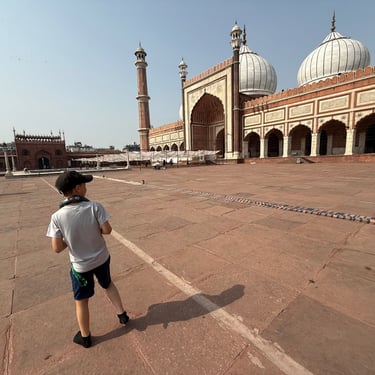
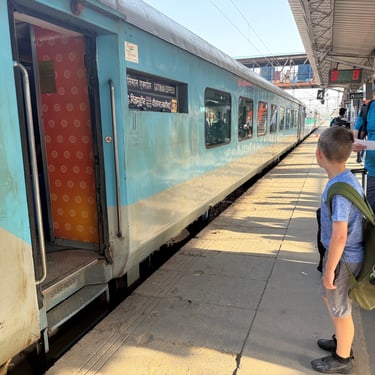

Option 2: Private Guides and Drivers
The alternative is hiring a private guide and driver, either for specific sites or full sightseeing days. This approach is very common on the Golden Triangle and surprisingly affordable compared with many countries.
Private tours typically include:
driver and air-conditioned car, usually with bottled water included
licensed guide
suggested sightseeing route
Why Private Tours Work Well for Families
Simpler logistics
Having a driver and guide removes much of the practical planning. They handle navigation, traffic and parking, which is especially helpful in large cities like Delhi where attractions are spread across the city.
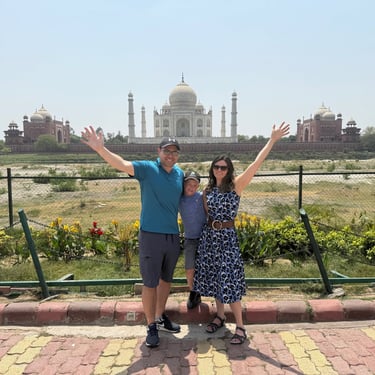
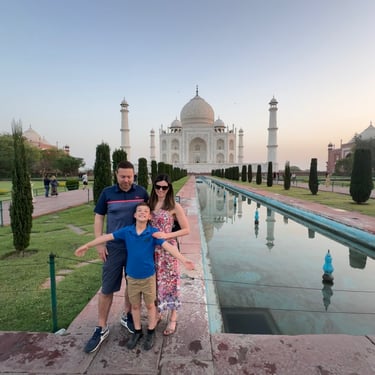
In Agra, our guide also organised our sunrise Taj Mahal tickets the evening before, which meant we could enter quickly without dealing with ticket lines early in the morning. He also knew the best photo spots and was very happy to take plenty of family photos for us, which made the visit much more relaxed.
For more on the logistics of visiting the Taj Mahal, see: Visiting the Taj Mahal with Kids: Best Times, Tips & Nearby Activities
Better historical context
Guides bring sites to life with stories rather than just facts. At the Taj Mahal, for example, understanding the story of Emperor Shah Jahan and Mumtaz Mahal makes the visit more meaningful for children.
Easier access to hidden stops
Drivers also make it easier to visit places that are difficult to reach independently.
For example, many travellers stop at:
Fatehpur Sikri
Chand Baori
when travelling between Agra and Jaipur.
For a comparison of travel options for the Golden triangle see: Train vs Car for the Golden Triangle: What Works Best for Families?
Cost Comparison
Private tours are often more affordable than families expect.
Typical costs include:
Private guide for a half-day tour: ₹2,000–₹4,000 (£20–£40)
Private driver for a full day: ₹4,000–₹7,000 (£40–£70)
Many travellers also book combined transport and tours, which simplifies train bookings and transfers between cities. Private guides and tours are readily available to book via Get Your Guide or Viator. We organised ours as a bespoke package for example, our quote for transport, trains and guiding across the Golden Triangle was £160 per person. To price up against a fully organised package with hotels check our Tour Radar who offer a variety of options for all budgets and itineraries.
For a full breakdown of our trip costs, see: How Much a 10-Day Golden Triangle Family Trip Costs (With Real Numbers)
Our Approach: A Hybrid Model
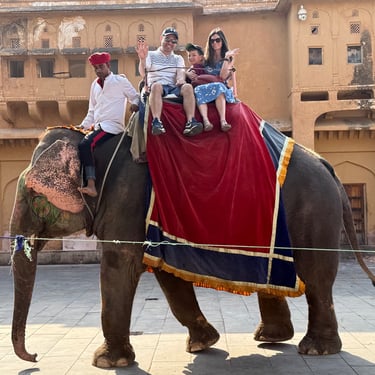
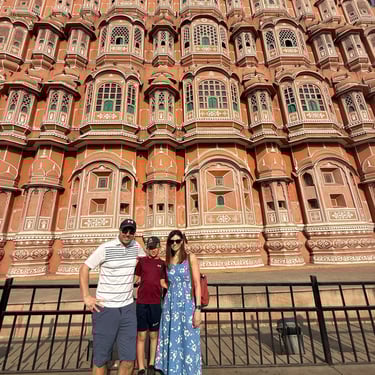
For our trip, we used a mix of both approaches.
We booked:
private guide for Delhi sightseeing
Taj Mahal sunrise tour in Agra
guided day in Jaipur
But we also explored some places independently and organised our own accommodation.
This hybrid approach worked well because it combined:
structured learning at major sites
flexibility when energy levels dropped
What Children Usually Enjoy Most
From our experience, children tend to enjoy:
interactive experiences like rickshaw rides in Old Delhi
exploring forts and palace courtyards
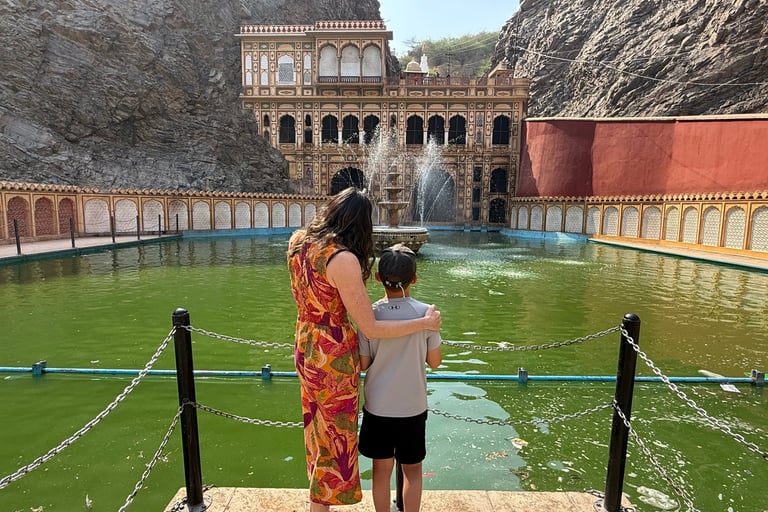
spotting animals like monkeys at Galta Ji (Monkey Temple)
They rarely need long historical explanations. The best tours therefore balance short storytelling with time to explore.
Which Option Is Best for Families?
For most families visiting India for the first time, the ideal approach is a mix of both. Use private guides for key sites where explanation adds value, and explore independently when you want flexibility. This keeps the trip structured without making it feel over-scheduled.
Planning the Bigger Picture
If you're still deciding whether the Golden Triangle works well with children, read: Is the Golden Triangle Good for Kids? What Parents Should Know Before Visiting India
And if you're budgeting for the trip overall: Budget vs Luxury Travel in India with Kids: Where Comfort Really Matters
With the right balance of guidance and independence, India becomes far easier to navigate with children than many parents expect. For all our India content check out our India Hub.